
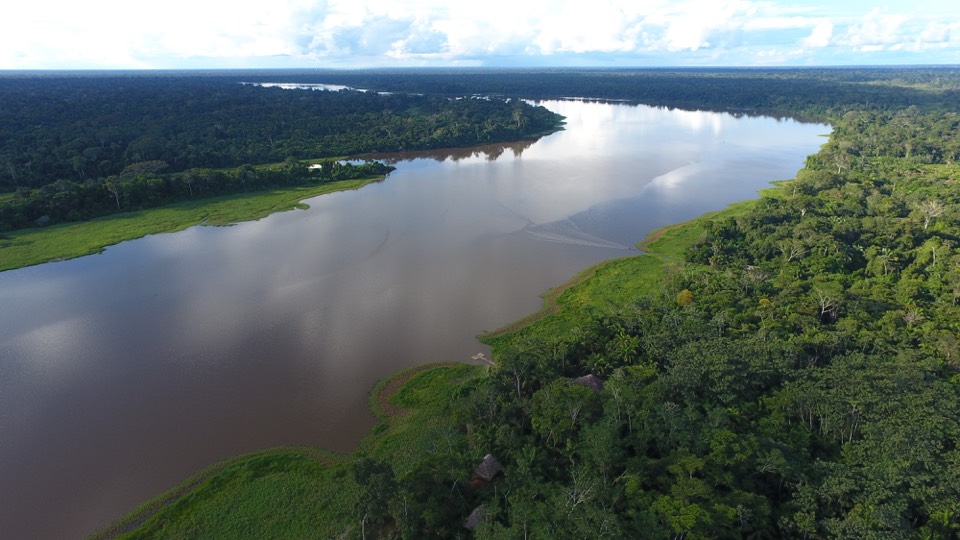
A protected area in the Bolivian Amazon
The Aquicuana Reserve
More than 20,000 hectares of rainforest around Lake San José, 20 km from the city of Riberalta in the Beni department of Bolivia. Two communities live inside it, Warnes and San José, and so does Motacú, Sustainable Bolivia's research station.
The name
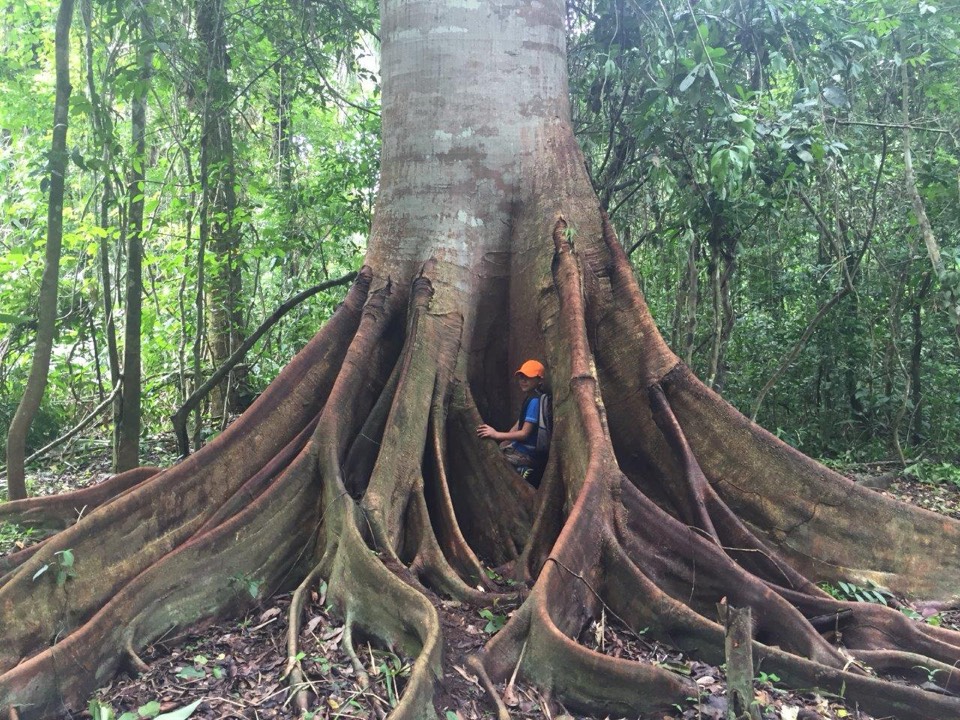
Land of the giant trees
Aquicuana comes from Tacana, a language of the region, and means land of the giant trees. The forest is partly tropical evergreen forest and partly tropical rainforest.
The tree in the photo is a mapajo (Ceiba pentandra), one of the reserve's giants.
History
How the reserve came to be protected
1995
The municipality of Riberalta passes the first law to protect the area around Lake San José.
2004
The protected area grows to 1,600 hectares.
2016
Sustainable Bolivia, the Fundación Amazonia and the municipality of Riberalta expand the reserve to more than 20,000 hectares, to protect it from farming expansion, intensive cattle ranching, deforestation, mining and the over-extraction of its natural resources.
2018
The communities of Warnes and San José officially become part of the reserve.
2019
A community centre, a tourist office and a restaurant are built in Warnes.
The communities
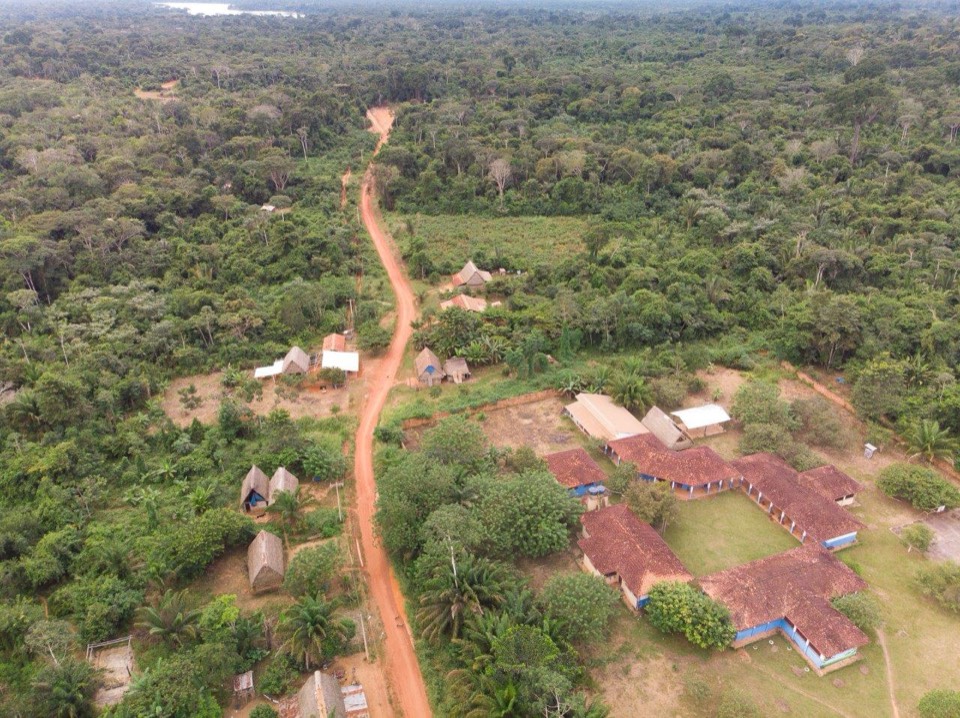
Warnes and San José
Farmers founded Warnes in 1957, near the lake for its water. About 420 people live there, most of them of Tacana descent. They live from farming, Brazil nut harvesting, fishing and raising animals. Warnes has a primary and a secondary school and a health post, and it sits at the entrance to the reserve.
Fifteen families founded San José in 1975, when they came to work rubber. About 150 people live there, growing rice, bananas and manioc. The village has no running water or electricity.
Each community elects its own community president, and both live mainly from farming and fishing.
Climate
Hot and humid all year
- Dry season
- April to October
- Rainy season
- November to March
- Heaviest rain
- December to February
- Hottest months
- August and September
- Average highs
- 29 to 35 °C
- Average lows
- 18 to 23 °C
More about the reserve
What you can read next
Plants and animals
More than 330 bird species, 40 kinds of frog, jaguars and trees still unknown to science.
Conservation
What threatens the forest, what Sustainable Bolivia and the communities do about it, and the rules for visitors.
Ecotourism
Hiking, boat trips, birdwatching, fishing and visits to the communities, with local guides.
Questions
Transport, the weather, what to pack, health and visas for a tourist visit.
aquicuana.org
The reserve has its own website, with the full list of recorded species.